
Accessible Kitchen Essentials for Independent Living
You need a kitchen that supports your independence, where cooking and meal prep are easy and enjoyable. Start by clearing cluttered countertops, simplifying kitchen storage solutions, and organizing cabinets for easy access. Essential adaptive cooking tools, easy-to-use appliance arrangements, and smart drawer space management can make a huge difference. Don't forget to incorporate ergonomic design principles, like rounded edges and smooth finishes, to guarantee comfort and safety. By implementing these accessible kitchen essentials, you'll create a functional workspace that empowers your independence. Now, explore how to fine-tune your kitchen layout to maximize efficiency and convenience.
Key Takeaways
• Implementing adaptive kitchen essentials, such as ergonomic cutlery and adjustable work surfaces, promotes independence and comfort in cooking tasks.
• Strategically placing appliances and designing workflow reduces walking distances, strain, and obstacles for easy navigation and accessibility.
• Incorporating accessible storage solutions, like adjustable shelving and pull-out racks, enables easy reach and minimizes clutter for a safe cooking experience.
• Task-oriented lighting, including motion sensor and under cabinet lighting, provides hands-free illumination and enhances safety in the kitchen.
• Designing ergonomic work surfaces with adjustable heights and multi-level surfaces accommodates different abilities and promotes independent living.
Clearing Cluttered Countertops
You likely spend a significant amount of time in your kitchen, and cluttered countertops can make meal prep and cooking a frustrating experience. To create a more efficient and enjoyable cooking space, implementing effective decluttering strategies is crucial.
Start by clearing everything off your countertops and sorting items into categories. Get rid of anything you don't need or use regularly. Next, focus on functional workspace design by allocating specific zones for tasks like food preparation, cooking, and storage. This will help you stay organized and focused while cooking.
To maximize your space, incorporate organization hacks like installing shelves, hooks, or a pegboard to keep frequently used items within easy reach. Consider investing in space-saving solutions like a kitchen cart or a wall-mounted pot rack to free up counter space.
Essential Adaptive Cooking Tools
With your newly decluttered and organized kitchen space, it's time to focus on the adaptive cooking tools that'll help you navigate meal prep and cooking with ease. You'll be amazed at how these simple yet effective tools can make a significant difference in your cooking experience.
Here are some essentials to contemplate:
-
Portable cooktops: These compact cooking surfaces provide flexibility and convenience, allowing you to cook anywhere in your kitchen. They're perfect for those who need extra space or have limited mobility.
-
Ergonomic cutlery: Say goodbye to fatigue and discomfort while cooking. Ergonomic cutlery is designed to fit comfortably in your hand, reducing strain and making meal prep a breeze.
-
Adjustable seating and versatile cookware: Invest in seating that adjusts to your needs, providing comfort and support while cooking. Pair this with cookware that's easy to handle and clean, making cooking and serving a cinch.
Simplifying Kitchen Storage Solutions
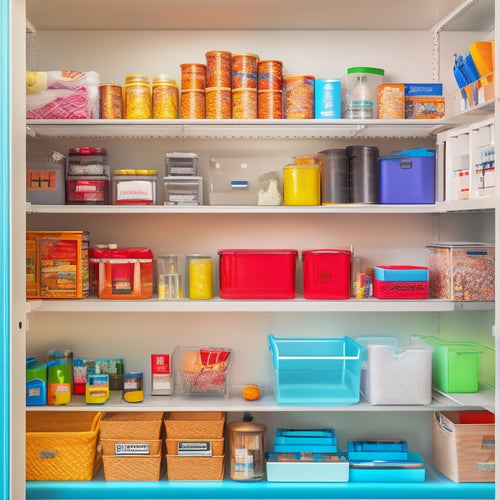
Optimize your kitchen's storage capacity by implementing smart solutions that keep frequently used items within easy reach, freeing up space and reducing clutter. You'll find that a well-organized kitchen makes cooking and meal prep a whole lot easier.
Consider installing space-saving shelving that maximizes vertical space, allowing you to store less frequently used items, like special occasion dishes or infrequently used cookbooks, out of the way. This will create more room for the essentials, like pots, pans, and utensils, which you can store in user-friendly containers.
Look for containers with easy-to-grasp handles and clear labels, making it simple to identify what's inside. By streamlining your storage, you'll reduce the time spent searching for items and make your kitchen a more enjoyable space to work in.
Plus, with everything neatly organized, you'll be more likely to maintain your kitchen's tidiness, ensuring a safe and independent cooking experience.
Easy-to-Use Appliance Arrangements
By strategically placing your appliances in easy-to-reach locations, you'll create a kitchen workflow that saves time and energy. In a modern kitchen, efficient design is key to independent living.
Consider the 'golden triangle' concept, where your most frequently used appliances form the points of a triangle, allowing you to move easily between them.
Here are some tips to help you optimize your appliance arrangement:
-
Place your oven, stove, and refrigerator in a triangular formation to reduce walking distances and improve workflow.
-
Install a microwave at a comfortable height to avoid straining your back or shoulders.
-
Position your dishwasher near the sink to reduce water splashing and make loading/unloading easier.
Accessible Cabinet Organization Systems
You'll maximize your kitchen's storage capacity and reduce strain on your body by implementing accessible cabinet organization systems that cater to your needs. By installing custom shelf dividers, you can create separate compartments for different items, making it easier to find what you need without having to dig through clutter. Plus, adjustable height dividers allow you to tailor the storage space to your comfort level, reducing the need for bending or straining.
Another essential feature of accessible cabinet organization systems is easy access to frequently used items. Pull-out spice racks, for instance, bring the spices to you, eliminating the need to reach up high or dig through a crowded cabinet. This not only saves time but also reduces the risk of accidents.
Smart Drawer Space Management
In addition to accessible cabinet organization systems, thoughtful management of your drawer space can greatly impact the overall usability of your kitchen. By optimizing your drawer storage, you can reduce clutter, improve accessibility, and make meal prep a whole lot easier.
Here are some smart strategies to get you started:
-
Use drawer dividers or organization trays to separate utensils, cookware, and other kitchen essentials into categorized compartments. This makes it easy to find what you need when you need it.
-
Implement smart storage solutions, such as hidden compartments or sliding drawers, to maximize your available space and keep countertops clear.
-
Assign a home for each item, so everything has a designated place to return to after use. This helps maintain order and prevents clutter from building up.
Easy Grip Kitchen Utensils
With ergonomic designs and contoured handles, easy grip kitchen utensils make cooking and meal prep a breeze, even for those with limited dexterity or mobility issues. You'll appreciate the comfort and control these utensils provide, reducing fatigue and strain while cooking.
Easy grip utensils also promote kitchen safety by minimizing the risk of accidents caused by slipping or dropping items. Plus, they're often designed with kitchen organization in mind, featuring convenient storage hooks or compact shapes that maximize drawer space.
When selecting easy grip utensils, look for features like textured handles, angled grips, and balanced weight distribution. These design elements will help you maintain a secure hold, even with limited hand strength or coordination.
Consider a utensil set that includes a range of tools, such as spoons, spatulas, and whisks, to cover all your cooking needs. By incorporating easy grip kitchen utensils into your cooking routine, you'll enjoy greater independence and confidence in the kitchen.
Wheelchair-Friendly Kitchen Layouts
When designing a wheelchair-friendly kitchen layout, you'll want to prioritize three key elements.
You'll need to create clear floor paths that allow you to easily maneuver around the space.
Clear Floor Paths
You'll need to plan a wheelchair-friendly kitchen layout that guarantees unobstructed floor paths, allowing you to easily move around the kitchen without obstacles.
A cluttered kitchen floor can be a major safety hazard, especially for individuals with mobility challenges. Unobstructed floor paths are essential to prevent tripping, slipping, or falling, which can lead to serious injuries.
To ensure unobstructed floor paths, consider the following:
- Keep the floor clear of cords, wires, and other tripping hazards.
- Position kitchen appliances and furniture at least 3 feet away from each other to create a wide, obstacle-free path.
- Install adjustable shelving or storage units to keep frequently used items within easy reach, reducing the need to navigate around the kitchen.
Adaptive Work Surfaces
How can you optimize your kitchen's work surfaces to accommodate your wheelchair or mobility needs, ensuring a safe and efficient cooking experience? One key aspect to keep in mind is the height of your work surfaces. Look for countertops and tables with adjustable height settings, allowing you to customize the surface to your comfort level. This will enable you to cook and prepare meals without straining or feeling uncomfortable.
Ergonomic design is also vital in an adaptive kitchen. Keep in mind installing work surfaces with rounded edges and smooth, matte finishes to reduce the risk of injury or discomfort. Additionally, incorporate multi-level surfaces to create a comfortable cooking experience.
Here are some examples of adaptive work surfaces:
| Feature | Description |
| Adjustable Height | Countertops and tables with customizable height settings |
| Ergonomic Design | Rounded edges, smooth finishes, and multi-level surfaces for comfort and safety |
| Open Space | Clear floor paths and minimal obstructions for easy wheelchair navigation |
| Task-Oriented Zones | Designated areas for specific cooking tasks, such as food prep and cooking |
Easy Reach Storage
Optimizing your kitchen's storage layout is just as crucial as its work surfaces, as it enables you to access the items you need quickly and safely from your wheelchair.
A well-designed storage system guarantees that everything you need is within easy reach, reducing strain and fatigue.
To achieve this, consider incorporating the following features into your kitchen design:
-
Adjustable shelving that can be tailored to fit your needs, allowing you to store items at a convenient height
-
Ergonomic containers with easy-to-grasp handles, making it simple to retrieve items without straining
-
Pull-out drawers and height-adjustable shelves that bring items to you, eliminating the need to stretch or bend
Illuminating Task-Oriented Lighting
Task-oriented lighting illuminates specific areas of your kitchen, such as countertops, islands, and sinks, to help you focus on the tasks at hand. This type of lighting is essential for independent living, as it enables you to perform tasks safely and efficiently. With adjustable brightness and focused lighting, you can customize the lighting to suit your needs.
For example, you can adjust the brightness to reduce glare or eye strain, making it easier to read recipes or prepare meals. Consider installing motion sensor, under cabinet lighting to provide hands-free illumination. This feature is particularly useful when you need to access items in your cabinets or drawers, as the light will turn on automatically when you approach.
Additionally, under cabinet lighting can help reduce shadows on your countertops, making it easier to see what you're doing. By incorporating task-oriented lighting into your kitchen, you'll be able to cook, clean, and prepare meals with confidence and independence.
Related Posts
-
Stockpile Essentials: Must-Have Items for Home
I keep my home stocked with essentials to avoid last-minute trips and guarantee smooth daily operations. I prioritize...
-

Transform Your Bathroom to Boost Home Sales
When you transform your bathroom into a serene oasis, you're not just making it look pretty - you're tapping into buy...
