
Why Cluttered Kitchens Trigger Anxiety in Some People
You're not alone if your disorganized kitchen leaves you feeling anxious and overwhelmed. Research shows a direct link between kitchen mess and increased stress levels, as clutter bombards your senses with stimuli, leading to visual overload and sensory information overload. This triggers a stress response, making it difficult to focus and complete tasks. Additionally, disorganized kitchens can mirror cluttered mindsets, impairing cognitive function and contributing to daily frustrations. By understanding the connection between clutter and anxiety, you'll be closer to accessing a peaceful kitchen environment that promotes mental well-being and serenity - and it starts with the next step.
Key Takeaways
• Cluttered kitchens can trigger anxiety due to the overwhelming visual stimuli, leading to feelings of overwhelm and increased stress levels.
• Disorganization in kitchens can mirror cluttered mindsets, impairing cognitive function and contributing to increased symptoms of depression and anxiety.
• The chaos in cluttered kitchens can hinder focus, task completion, and mental clarity, further exacerbating anxiety and stress.
• The constant processing of visual clutter in kitchens can lead to a sense of frustration, helplessness, and guilt, triggering anxiety responses.
• Effective clutter management and organization techniques can reduce anxiety by promoting a sense of control, clarity, and calmness in the kitchen environment.
Kitchen Clutter's Anxiety Connection
As researchers have long suspected, cluttered kitchens can indeed trigger anxiety in individuals, with studies revealing a direct correlation between kitchen clutter and increased stress levels.
You may not be aware of it, but the state of your kitchen can have a profound impact on your mental well-being. Clutter management is pivotal in creating a peaceful environment that fosters relaxation, rather than anxiety.
When your kitchen is disorganized, it can contribute to feelings of overwhelm, making it difficult to focus and prioritize tasks. This, in turn, can lead to increased anxiety levels.
Cluttered kitchens can also serve as anxiety triggers, as the visual chaos can be distracting and stressful. Moreover, the physical act of maneuvering through clutter can be frustrating, leading to feelings of irritability and anxiety.
Effective clutter management is vital in mitigating these effects. By implementing strategies to organize and declutter your kitchen, you can create a space that promotes relaxation and reduces anxiety.
Visual Overwhelm and Stress
When you enter a cluttered kitchen, your senses are immediately bombarded with a multitude of stimuli, from the mess of dirty dishes to the jumble of appliances and gadgets.
This visual overload can quickly lead to feelings of anxiety and stress, as your brain struggles to process the chaos that surrounds you.
As you take in the sight, you can't help but feel a sense of overwhelm, which can have a profound impact on your mental and emotional well-being.
Sensory Information Overload
Your brain is bombarded with an overwhelming amount of visual stimuli every time you step into a cluttered kitchen, triggering a stress response that can quickly escalate into anxiety. This sensory overload can be overwhelming, making it difficult for your brain to process the sheer amount of information. As a result, your nervous system goes into overdrive, releasing stress hormones like cortisol and adrenaline. These hormones prepare your body to either fight or flee, leading to feelings of anxiety, unease, and even panic.
Cluttered spaces, like kitchens, can be particularly triggering because they're often associated with feelings of comfort and relaxation. However, when they're disorganized and chaotic, they can become anxiety triggers. The visual clutter can be so overwhelming that it's hard to focus on a single task, leading to feelings of frustration and helplessness.
Chaos in Plain Sight
Cluttered kitchens assault your senses with a visual cacophony of dirty dishes, scattered utensils, and expired food, creating a pervasive sense of chaos that can't be ignored. The sheer volume of clutter can be overwhelming, making it difficult for you to focus on a single task.
In a cluttered space, your brain is constantly processing visual information, trying to make sense of the disarray. This visual overwhelm can trigger feelings of anxiety and stress, making it challenging to cook, eat, or even socialize in the kitchen.
The kitchen, once a hub of nourishment and comfort, becomes a source of tension and frustration. Every glance at the countertops, sink, or stove serves as a stress trigger, reminding you of the mess that needs to be addressed. The cluttered space can also make you feel guilty, anxious, or ashamed, further exacerbating the emotional toll.
Clutter's Impact on Mental Health
As you navigate your cluttered kitchen, you're likely unaware of the silent culprit contributing to your anxiety: mental clutter. Research suggests that the state of your physical space has a direct impact on your mental well-being, with cluttered environments mirroring cluttered mindsets.
Cluttered Mindsets
Research has consistently shown that living amidst cluttered surroundings can impair cognitive function to a large extent, leading to increased stress levels and anxiety. You may not realize it, but the clutter around you can seep into your mind, influencing your thoughts and emotions. Cluttered surroundings can lead to cluttered thoughts, making it challenging for you to focus and prioritize tasks. This, in turn, can exacerbate feelings of anxiety and overwhelm.
On the surface, your kitchen may appear to be a space of organized chaos, with everything having its designated spot. However, this perceived order can be deceptive. The visual clutter can still have a profound impact on your mental state, contributing to feelings of unease and discomfort.
Recognizing the connection between your surroundings and your mental well-being is crucial. By acknowledging the impact of clutter on your mind, you can take the first step towards creating a more organized, peaceful, and anxiety-free environment. By doing so, you'll be better equipped to manage your stress levels and cultivate a clearer, more focused mindset.
Mental Clutter Correlation
Your surroundings can have a profound impact on your mental health, and the correlation between clutter and anxiety is particularly striking, with studies suggesting that individuals who live or work in cluttered environments are more likely to experience increased symptoms of depression and anxiety.
When you're surrounded by clutter, your brain is constantly processing the visual stimuli, making it difficult to focus and prioritize tasks. This is especially true in a cluttered workspace, where the productivity impact can be significant. You may find yourself feeling overwhelmed, frustrated, and struggling to meet deadlines, further exacerbating anxiety and stress.
The same holds true for a cluttered home, where the emotional distress can be even more pronounced. Clutter can serve as a constant reminder of unfinished tasks, unresolved issues, and unfulfilled expectations, leading to feelings of guilt, shame, and anxiety.
Disorganization and Daily Frustrations
By the time you've scrambled to find a clean coffee mug, searched for the misplaced sugar jar, and wrestled with the cluttered countertops, your morning routine has already been derailed by the disarray that plagues your kitchen. This daily frustration can have a significant impact on your mental state, contributing to increased stress levels and anxiety.
Effective stress management begins with addressing the root cause of this chaos: disarray. Implementing simple organization techniques, such as designating a specific spot for frequently used items or utilizing storage containers, can greatly reduce the sense of overwhelm that comes with crucial a cluttered kitchen.
As you begin to tackle the disarray, you'll notice a decrease in the daily frustrations that come with it. You'll save time, reduce mental fatigue, and create a sense of control over your environment. By streamlining your kitchen's organization, you're not only creating a more efficient space but also taking an essential step towards managing stress and anxiety.
Creating a Calm Kitchen Environment
With a clutter-free kitchen in place, you can now focus on cultivating a serene atmosphere that fosters a sense of calmness and relaxation. To achieve this, incorporate mindful organization principles that prioritize functionality and simplicity. This means assigning a designated spot for each item, making it easy to find what you need when you need it.
Calming colors such as soft blues, greens, and neutral tones can also contribute to a peaceful ambiance. These hues have a calming effect on the mind, reducing anxiety and promoting relaxation.
Aim for functional simplicity and minimalist design in your kitchen layout. Avoid cluttered countertops and opt for clean lines, minimal ornamentation, and a limited color palette. This will create a sense of visual calmness, allowing you to focus on the task at hand without feeling overwhelmed.
Kitchen Storage Solutions for Anxiety
You'll find that strategic storage solutions can make a significant difference in maintaining a clutter-free kitchen, as they help keep countertops clear and create a sense of control over your cooking environment. By implementing clever storage solutions, you'll reduce visual clutter, making it easier to focus on meal prep and cooking. This, in turn, can help alleviate anxiety triggered by a chaotic kitchen.
Here are three storage solutions to get you started:
-
Install a pegboard: Hang a pegboard on a wall or the back of a door and use hooks to store frequently used items like pots, pans, utensils, and spices. This keeps them off the countertops and within easy reach.
-
Opt for a minimalist design: Choose cabinets and shelves with clean lines and a minimalist aesthetic to create a sense of calm. Consider using calming colors like white, gray, or blue to further promote relaxation.
-
Utilize vertical space: Make the most of your kitchen's vertical space by installing shelves, hooks, or a pot rack. This will keep items organized and out of the way, creating a sense of control and reducing anxiety.
Decluttering for Improved Focus
Clearing cluttered countertops and surfaces allows you to focus on the task at hand, as a clutter-free environment helps to quiet the mind and reduce distractions. By decluttering your kitchen, you can create a space that promotes mental clarity and boosts productivity. A cluttered kitchen can be overwhelming, making it difficult to concentrate on cooking or meal prep.
On the other hand, a minimalist design can help you stay focused and avoid feelings of anxiety. When your kitchen is organized and tidy, you can prioritize tasks more efficiently, leading to productivity improvement. You'll be able to quickly find the ingredients and tools you need, allowing you to complete tasks faster and with greater ease.
Additionally, a clutter-free kitchen can also reduce stress and anxiety, creating a more peaceful cooking experience. By decluttering your kitchen, you can create a space that supports your mental well-being and helps you stay focused on the task at hand.
Simplifying Kitchen Layout for Serenity
Optimizing your kitchen's layout can greatly diminish stress by creating a sense of calm and control. A well-designed kitchen can make a significant difference in your overall well-being. By simplifying your kitchen's layout, you can establish a peaceful ambiance that promotes relaxation and reduces anxiety.
Here are three ways to achieve a serene kitchen layout:
-
Adopt a minimalist design: Remove any unnecessary items and focus on clean lines, minimal ornamentation, and a limited color palette. This will help create a sense of calm and reduce visual clutter.
-
Choose calming colors: Select colors that promote relaxation, such as soft blues, greens, or neutral tones. These colors can help diminish stress and anxiety, creating a peaceful atmosphere.
-
Prioritize functional layout: Guarantee that your kitchen's layout is functional and easy to navigate. This will help reduce frustration and promote a sense of control, leading to a more peaceful cooking experience.
Related Posts
-
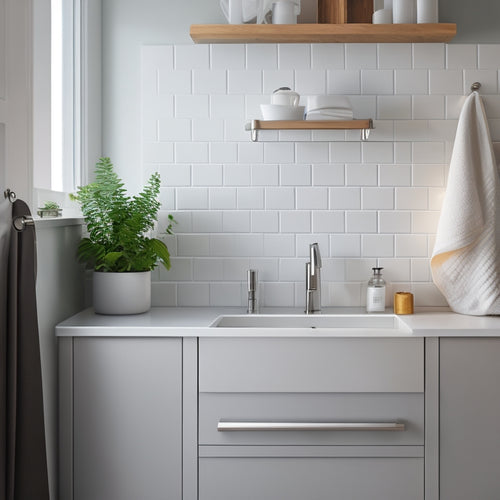
Streamlined Kitchen Sink Organization Solution
A streamlined kitchen sink organization solution must balance functionality with aesthetics. A well-designed system s...
